Expedited automotive shipping is the critical last line of defense for just-in-time supply chains. An assembly line at a Tier 1 automotive plant in Michigan produces roughly 1,000 vehicles a day. If a brake rotor shipment from a supplier in Ontario doesn’t arrive on time, that line stops. The cost of a production shutdown isn’t measured in freight charges — it’s measured in the thousands of dollars per minute the plant loses while every station on the line sits idle.
That’s why expedited automotive shipping exists — not as a luxury service, but as insurance against the catastrophic cost of a missed delivery. And for Canadian automotive suppliers shipping just-in-time parts to US assembly plants, the carrier handling these loads needs to understand both the urgency of the freight and the complexity of getting it across the border fast.
How JIT automotive freight actually works
Just-in-time manufacturing means parts arrive at the plant exactly when they’re needed — not days before, not hours before, but synchronized with the production schedule. The plant doesn’t maintain large inventories of components. Instead, it relies on a network of suppliers shipping small, frequent batches that arrive in sequence with the build schedule.
This system is extraordinarily efficient when it works. When it breaks — when a shipment is late, damaged, or stuck at a border crossing — the entire downstream production schedule is disrupted. The plant can’t build vehicles without the parts, and every vehicle that doesn’t get built that day is a vehicle that doesn’t get sold that quarter.
For Canadian automotive suppliers shipping into US plants, this creates a specific set of requirements. The carrier needs to pick up in Ontario, clear the border without delays, deliver to a plant in Michigan, Ohio, Indiana, or further south within a guaranteed delivery window — and do it reliably enough that the plant can base their production schedule on the carrier’s performance.
Team drivers: the backbone of expedited automotive shipping
Expedited freight over long distances requires team drivers — two drivers in the cab, taking turns driving and sleeping. While one driver is on duty, the other is in the sleeper berth accumulating off-duty time. When the first driver hits their hours-of-service limit, they swap. The truck keeps moving.
A solo driver running under US HOS regulations can drive a maximum of 11 hours within a 14-hour duty window, then needs 10 consecutive hours off. On a 2,400-mile run from Brampton to Los Angeles, a solo driver would need roughly four driving days including rest periods. A team covers the same distance in roughly 48 hours with no stops except for fuel, inspections, and the border crossing.
For automotive freight, the difference between a 4-day solo transit and a 48-hour team transit is the difference between a production schedule that runs smoothly and one that needs to be rescheduled. Most OEMs won’t accept the 4-day option for JIT parts — team drivers are the baseline, not the upgrade.
The border crossing: where expedited automotive shipping is won or lost
A team driver crew running an expedited automotive load from Brampton to a plant in Michigan will typically cross at Windsor-Detroit (Ambassador Bridge or Tunnel) or Sarnia-Port Huron (Blue Water Bridge). The crossing time depends on three factors: the physical wait in line, the customs clearance process, and whether the truck gets pulled for inspection.
FAST certification addresses the first factor. A FAST-lane crossing during business hours is measured in minutes. The standard commercial lane during peak hours can run 60 to 90 minutes or longer. For a team crew on an expedited load, that hour saved at the border is an hour of driving they get on the other side.
CT-PAT certification addresses the inspection factor. CT-PAT carriers have a lower risk score in CBP’s targeting system, which means their trucks are less likely to be randomly pulled for examination. A random inspection on an expedited automotive load can add 2-4 hours to the transit time — hours that the plant is counting on.
Documentation handling addresses the customs clearance factor. In 2026, pre-arrival electronic filing is mandatory — the carrier’s customs broker must submit the entry data before the truck arrives at the booth. CBSA’s CARM system on the Canadian side requires digital verification of the importer’s account status before goods can be released. If the documentation isn’t pre-staged and verified before the truck is dispatched to the border, the crossing becomes a documentation exercise instead of a transit event.
A carrier experienced in expedited automotive shipping coordinates all three of these elements — FAST lane access, CT-PAT status, and pre-staged documentation — before the driver leaves the supplier’s dock. The border crossing is a planned event, not a surprise.
Real-time tracking: what the plant actually needs to see
Automotive OEMs and Tier 1 suppliers don’t just want to know where the truck is. They want to know the ETA at the plant — updated in real time based on actual position, speed, traffic, and border-crossing status. They want to see when the truck cleared the border, what time it passed specific highway checkpoints, and whether the delivery window is still achievable.
This level of visibility requires GPS-tracked tractors with data transmitted to the carrier’s dispatch system, and a dispatch team that can relay real-time ETAs to the customer’s logistics team. It also requires a carrier that tracks border-crossing timestamps — when the truck entered the queue, when it cleared primary inspection, and when it was released onto the US highway system.
For many expedited automotive shipping loads, the plant’s production scheduling team is making sequencing decisions based on the carrier’s ETA updates. If the carrier’s tracking data is three hours old, or if the dispatch team can only provide updates during business hours, the plant is making production decisions based on stale information. That’s where service failures originate — not from the driver, but from the information gap between the truck and the plant.
Guaranteed delivery windows for expedited automotive shipping
There’s a meaningful difference between a carrier that commits to a delivery window and a carrier that quotes a transit time. A transit time is an estimate. A delivery window is a commitment — the carrier is telling the plant: your freight will arrive between this hour and this hour, and our expedited service operation is structured to make that happen.
A carrier that offers guaranteed delivery windows for expedited automotive shipping is making a bet on their own operational capability. They’re saying their drivers are reliable, their equipment is maintained, their border-crossing process is dialed in, and their dispatch team can manage exceptions in real time. That’s a carrier worth paying the premium for, because the alternative — a missed window and a production shutdown — costs the shipper far more than the freight charge.
Alpha Trans expedited automotive operations
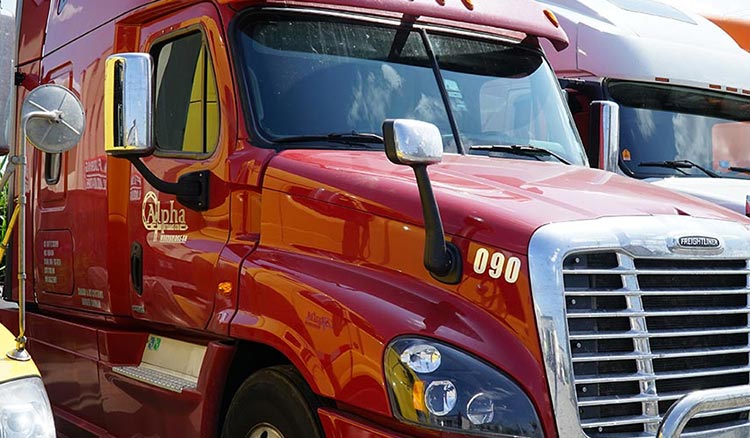
Alpha Trans runs team driver operations on our own equipment — 200 company-owned tractors, all ELD-compliant and GPS-tracked. Our drivers carry individual FAST cards for priority border crossing at Windsor, Fort Erie, and Sarnia. We’re CT-PAT, FAST, and PIP certified, with customs documentation pre-staged before every expedited automotive shipping load is dispatched.
Representative expedited transit times from Brampton: approximately 12 hours to Chicago, 24 hours to Dallas, 48 hours to Los Angeles. These are team-driver times with FAST-lane border crossing — not solo-driver estimates with standard-lane waits.
If you’re shipping JIT automotive parts across the border and you need a carrier that understands what a missed delivery window costs, request a quote or call dispatch directly at (905) 799-1525. We’ll confirm a team and a truck within the hour.