

Food & beverage
Cold chain integrity from the dock to the shelf. No excursions. No exceptions.
150 reefer trailers. Continuous temperature logging. CFIA and FDA compliant drivers. Reefer washouts between every load. Cross-border food freight is our specialty.
Why food freight is different
Roughly 20% of all temperature-sensitive goods are damaged during transit. For food shippers, that’s not a statistic — it’s a load of Ontario strawberries that arrives at 45°F instead of 33°F, and gets rejected at the receiver’s dock.
Cross-border food freight between Canada and the US faces a unique double challenge. The cold chain has to hold from pickup to delivery — through loading, transit, a border crossing that can add 30 to 90 minutes of wait time, and unloading at a receiver who will check the temp log before accepting the load. And the customs and food safety documentation has to be perfect — CFIA on the Canadian side, FDA on the US side, USMCA certificates of origin for duty treatment.
A temperature excursion during a border delay doesn’t just damage the product. It creates a liability chain that runs from the shipper to the carrier to the receiver to the end consumer. The carrier in the middle either prevents that — or causes it.
What we haul
If it needs to stay cold, we’ve been moving it for 20 years.
Fresh produce & dairy
Ontario-grown produce to US grocery chains. Dairy products at strict 33–40°F. Cross-border CFIA paperwork handled as part of the service. Reefer pre-cooled before pickup.
Frozen foods
Deep-frozen freight at -20°F. Ice cream, frozen meals, seafood. Unbroken sub-zero temperatures from plant to distribution center. Continuous logging proves it.
Beverages & confections
Craft beer, wine, chocolate, specialty foods. Ambient or lightly chilled transit. Multi-temp bulkhead trailers let us run mixed loads — frozen and chilled on the same truck.
Meat & protein
Beef, poultry, pork between Canadian processors and US distributors. USDA and CFIA inspection requirements coordinated before dispatch. Full chain-of-custody documentation.
How we protect your cold chain
The operational details that separate a food-grade carrier from a truck with a reefer unit.
Continuous temperature logging
Automated data recorded every few minutes from pickup to POD. Not periodic driver checks. Not manual logs. Unbroken chain of evidence for your receiver and for regulatory audits.
Real-time dispatch alerts
If the temperature deviates from setpoint, dispatch is alerted automatically. We call the driver, diagnose the issue, and if necessary re-route to a service facility before the product is compromised.
Reefer washouts between loads
Standard, not optional. Under FSMA, carriers must document previous cargoes and cleaning between loads. Cross-contamination between a fish load and a dairy load is a food safety violation, not just a quality issue.
CFIA & FDA trained drivers
Our drivers know pre-cool vs. cycle-sentry mode. They know when to reject a load at origin because product temperature is already compromised. They know food safety isn’t optional — it’s the job.
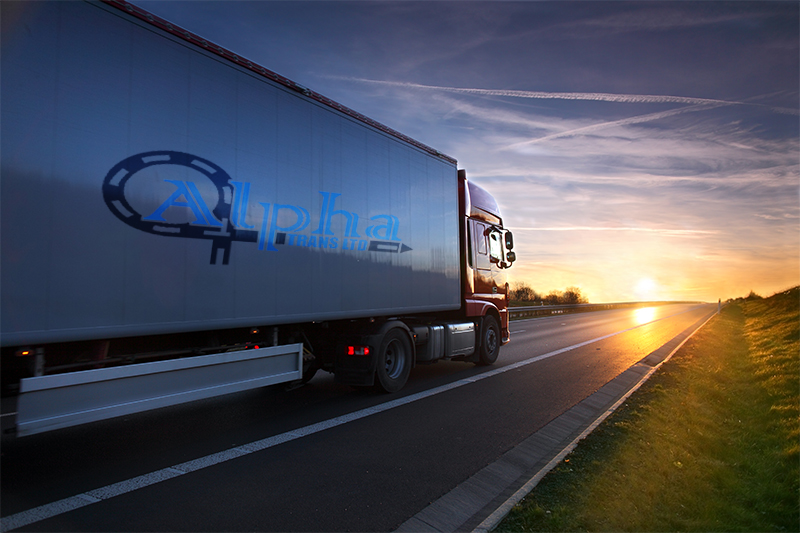
Food & beverage freight
Get a reefer quote in under an hour.
Tell us the commodity, temperature requirement, origin, and destination. We’ll come back with a rate, a transit time, and a trailer that’s already been washed out and pre-cooled.
or call (905) 799-1525 · email info@alphatransltd.com