The Canada Border Services Agency is in trouble, and Canadian shippers are paying the bill. CBSA border delays have been hitting Ontario, Quebec, and Manitoba crossings in waves since late April, with clearance times stretching from minutes to four, six, even eight hours. As of May 12, 2026, the agency was on its 55th public update about the issue. The system that processes eManifest filings — the digital pre-arrival paperwork that 11,000 trucks per day depend on — keeps falling behind during peak hours, catching up overnight, then breaking again the next afternoon.
This is not a snowstorm or a strike. It is a federal IT system that cannot handle the volume of trade it was built to process. And the federal modernization plan, by the government’s own timeline, will not even begin until late 2027.
If you ship freight from Brampton or the GTA into the United States, you need to understand what is happening, what it is costing you, and what your carrier should be doing about it right now.
What Triggered the Latest CBSA Border Delays
The current round of CBSA border delays traces back to an IT network update the agency performed on April 19, 2026. By April 25, the eManifest portal and the Electronic Data Interchange were dropping submissions. The first commercial client bulletin landed that day. Over the following weeks, the agency posted update after update — some reporting delays of a few minutes, others reporting more than seven hours.
The pattern is predictable now. Overnight, the backlog clears. By mid-morning, the system catches up. As volumes ramp through the afternoon, processing falls behind again. Drivers who submitted clearance requests at 7:30 a.m. have waited until evening for releases that should take minutes.
This is the second major CBSA system failure in eight months. In September 2025, a separate IT maintenance event corrupted data and crashed inspection systems for days. The agency confirmed at the time that neither outage was a cyberattack — both were planned maintenance events that went wrong. The full CBSA System Outage Contingency Plan is public, but most carriers cannot execute it under pressure.
The Real Cost of CBSA Border Delays for Canadian Shippers
The Canadian Trucking Alliance has done the math. A four-hour clearance delay adds roughly $300 in cost to a single truck. Across the 11,000 trucks crossing daily through Ontario, Quebec, and Manitoba, that adds up to $3.3 million per day. An eight-hour delay roughly doubles the figure. Over a single week of systemic outages, the CTA estimates the “outage tax” on Canadian groceries, medical supplies, and manufacturing parts runs between $30 million and $45 million.
That cost does not stay with the carrier. It flows downstream — into warehouse storage fees, missed JIT windows, contract penalties, and ultimately the shelf price of the goods crossing the border. The CTA has called the current situation “crisis mode” and warned that the supply chain has accepted these failures as the new normal.
The drivers feel it first. A team driver pulled over in Detroit waiting for clearance is not earning miles. The tractor is not turning. The shipper is not getting their reefer washout slot at the consignee. The whole chain stalls.
Why Reefer Freight Suffers Most During CBSA Border Delays
If you move perishables across the border, CBSA border delays hit you twice. The eManifest clearance is only the first hurdle. Reefer loads that require Canadian Food Inspection Agency approval — produce, meat, dairy, pharma — face a second layer of digital processing. When eManifest backs up, CFIA references stall behind it. Some loads have waited 12 hours or longer for clearance, processed first-in, first-out.
Temperature integrity gets harder to defend with each idle hour. A trailer sitting in the truck lot at Sarnia in July is burning fuel just to keep the reefer running. Insurance terms tighten when a load sits stationary outside the planned route. And if you are running USDA-cleared product the other way, FDA Prior Notice timelines compound the problem.
This is why cross-border reefer service is no longer just about a clean trailer and a working reefer unit. It is about a carrier that knows how to keep a load legal and product-safe when the federal clearance system fails.
What a Capable Carrier Does When the System Fails
CBSA does maintain a contingency framework. Carriers can present paper documentation at the port of entry, and the agency has confirmed it will not issue AMPS penalties for ACI infractions caused by an outage. Highway carriers using Customs Self-Assessment can submit a lead sheet with the carrier code, the importer business number, and a valid FAST card barcode.
The problem is that most carriers cannot execute on that paper process quickly. Their dispatch is offshore. Their documentation is paperless by design. Their drivers do not carry printed PARS barcodes. When the system fails, they wait.
A capable carrier does several things differently. The dispatcher keeps a direct phone line to the CBSA Technical Commercial Client Unit. The driver carries printed cargo control documents as a backup. The trailer is pre-staged near the customs office, not idling on the highway shoulder. The shipper gets a real-time message the moment a clearance stalls — not three hours later when the load is already late.
This is what 23 years of cross-border freight experience actually buys you. Not a slogan. A team that has built workflows around the assumption that the system will break.
FAST and CT-PAT: Why Certifications Matter More Now
Trusted-trader certifications were never just a marketing line. During CBSA border delays, FAST-card drivers move through dedicated lanes that face less congestion. CT-PAT-certified carriers get lower inspection rates from US Customs and Border Protection. Partners in Protection status on the Canadian side reinforces the trust chain. Together, these programs do not exempt you from the rules, but they shorten almost every transaction at the border.
The vast majority of Canadian trucking companies hold none of these. Some hold one. A small number hold CT-PAT, FAST, and PIP together, which is the only configuration that consistently shortens northbound and southbound clearance. That gap between certified and uncertified carriers widens dramatically during a system outage. When eManifest is processing in fits, the loads that move first are the ones the agency already trusts.
The same logic applies to compliance posture. CSA safety ratings, ELD compliance, HAZMAT endorsement coverage, and a clean SmartWay record all signal a carrier that is unlikely to get pulled for secondary inspection. Every secondary screen during a CBSA system event compounds the wait.
Five Questions to Ask Your Carrier This Week
If you are moving freight across the border in 2026, your carrier conversations should change. Generic capacity quotes are not enough. Ask these five questions, and listen for whether the answer is specific or vague.
1. Do you have written contingency procedures for CBSA system outages? A “yes, we figure it out” answer is not a procedure. Ask for the document.
2. Are you certified under CT-PAT, FAST, and PIP? All three, not one. The trust chain matters most when systems break.
3. Is your dispatch in-house, in Canada, and reachable at 2 a.m.? Outsourced dispatch handling a CBSA outage is a non-starter.
4. Do your drivers carry printed cargo control documents on every cross-border load? Paper is the backup when digital fails. If they do not have it, they cannot use the contingency.
5. How quickly will you alert me if a clearance stalls? Specific time targets, not “we’ll let you know.”
Most carriers will answer two of these well. The carriers worth keeping in 2026 will answer all five.
When This Crisis Ends — and Why It Will Not Soon
Here is the part nobody at the federal level wants to discuss plainly. The CBSA modernization request for proposals will not be issued until the first quarter of 2027. The procurement process, system design, and rollout will not begin in earnest until late 2027 or 2028. That means at least two more years of legacy infrastructure, IT patches, and the kind of CBSA border delays that have defined this spring. The Globe and Mail reported that shippers have already had to wait full weeks for clearances that normally take minutes.
Cross-border shippers cannot wait that out. The carriers that have already built around system fragility — paper backups, in-house dispatch, full trusted-trader certification, real-time communication — will keep delivering. The carriers that built around the assumption of stable government infrastructure will keep failing their customers.
This is not a temporary problem. It is a structural one. The shippers who recognize that and adjust their carrier mix now will protect their supply chains. The ones who do not will keep absorbing the outage tax.
How Alpha Trans Handles It
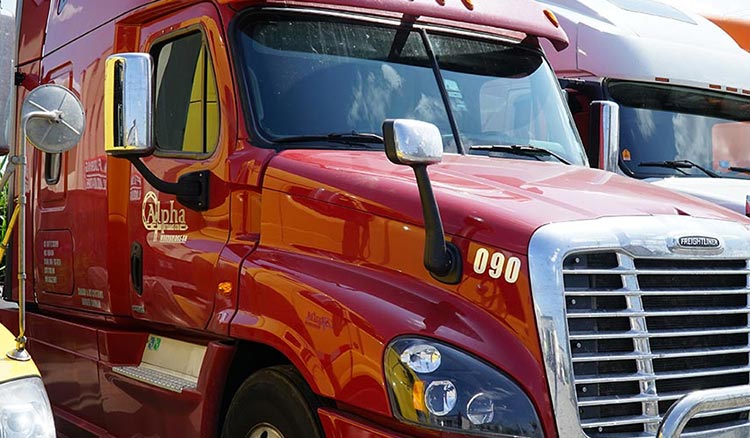
Alpha Trans has been running freight across the Canada-US border for 23 years from our Brampton headquarters. Our 200-tractor fleet is fully company-owned and fully ELD-equipped. We hold CT-PAT, FAST, and PIP on the security side, plus SmartWay and CSA on the compliance side. Our in-house dispatch operates 24/7 from Ontario, with direct lines to CBSA contacts. When eManifest goes down, our drivers carry printed cargo control documentation, and our team executes the paper contingency without losing the day.
If your current carrier has been quiet during this crisis, that tells you something. Request a quote or call us at 1-888-559-0010. We will tell you exactly how we would have handled your last delayed load. For more on what separates Alpha Trans from generic cross-border haulers, see why shippers choose us.